
Use Capbase to manage your startup equity from start to exit
Incorporate your startup, issue equity and raise funds.
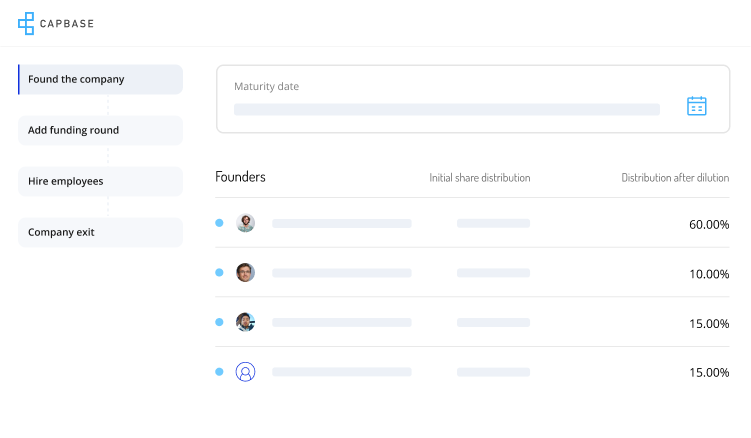
Divide up equity with co-founders
Incorporate your startup in 2-3 business days. Split equity with your founding team, purchase your shares and file your 83(b) election.
Raise funds from investors
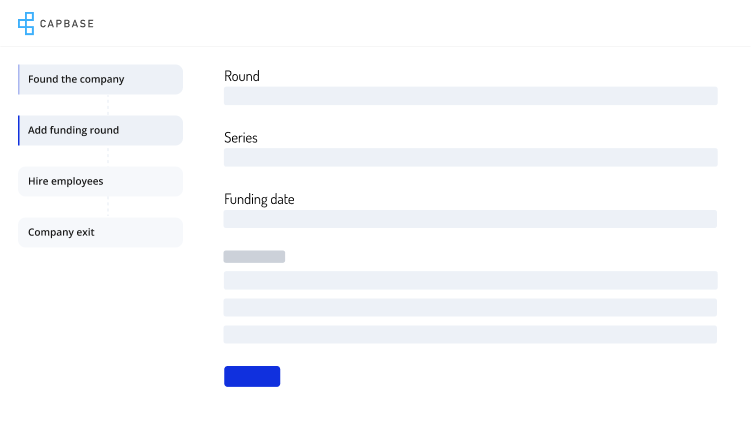
Use SAFEs and convertible notes to raise funds from angel investors & VCs. Your cap table will be automatically updated as you execute fundraising agreements!
Hire employees & issue equity
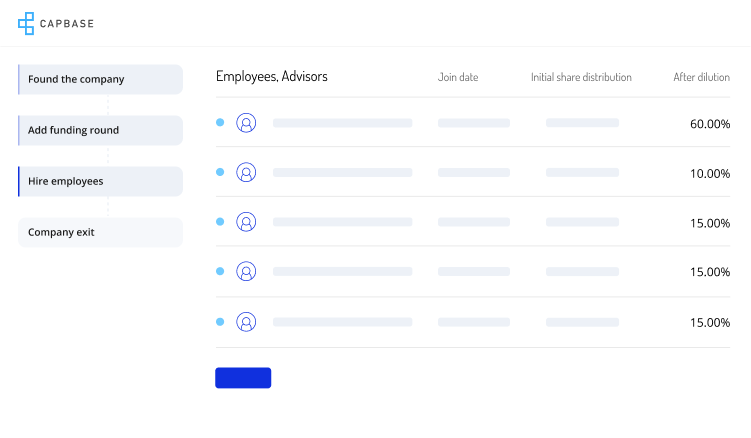
Issue shares, hire employees & contractors, bring on board advisors and deal with related compliance filings all on one platform.
Manage your stock plan
Issue additional share awards, get a 409a valuation, and simplify your company’s legal and financial operations as your startup scales.
What is a Startup Exit?
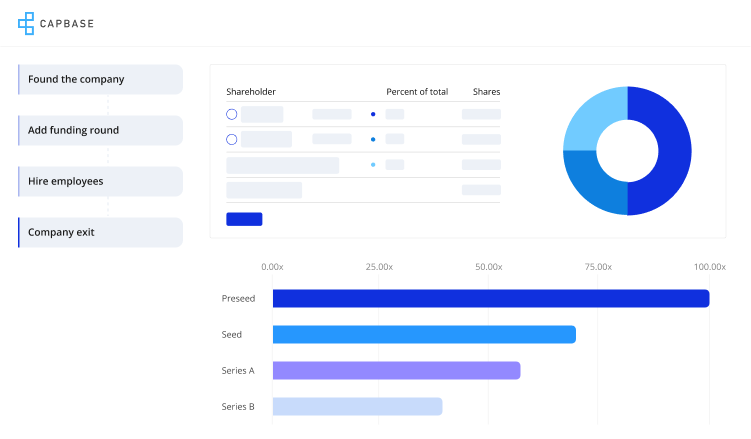
A startup exit is a liquidity event where the founders and shareholders of a company sell their ownership stakes, usually through an acquisition by another company or an Initial Public Offering (IPO). For founders and employees, the exit is the culmination of years of work—it is the moment where 'paper wealth' on a cap table turns into actual capital. However, the final amount you receive isn't just a simple percentage of the sale price; it is determined by a 'waterfall' that accounts for debt, investor protections, and the share classes of every person on the cap table.
Any More Questions?
The exit waterfall is the chronological order in which shareholders are paid during a sale. In most startups, creditors and lenders are paid first, followed by preferred shareholders (usually investors), and finally common shareholders (founders and employees). Because investors often have "liquidation preferences," they are guaranteed to get their initial investment back—and sometimes more—before common stockholders receive a single dollar. Understanding the waterfall helps you see the "real" value of your equity at different exit price points.
A liquidation preference is a clause in a term sheet that protects investors by ensuring they get paid first in an exit. A "1x preference" means the investor gets 100% of their investment back before others. However, some deals include 2x or 3x preferences, which can significantly "thin out" the remaining pool for founders if the company sells for a lower price than expected. Our calculator allows you to toggle these preferences to see exactly how they shift the payout dynamics.
This is a crucial distinction for founders. Non-participating preferred stock means the investor chooses between getting their liquidation preference back OR their percentage of the company as common stock. Participating preferred stock (often called "double-dipping") allows the investor to get their liquidation preference back first, and then also receive their proportional percentage of the remaining proceeds. Participating stock is much more dilutive for founders and employees during an exit.
Not necessarily. While a higher valuation is generally good, the "terms" of your funding rounds—like high liquidation preferences or participation rights—can mean that a founder might take home less money in a $100M exit than they would have in a $80M exit with cleaner, more founder-friendly terms. Using an exit calculator during fundraising helps you understand if a high valuation is worth the trade-off of aggressive investor protections.
Related articles
Most Favored Nation (MFN) Clause in Startup Investing: What it is and how it works
Learn what the Most Favored Nation clause means in investing, how it is used in startup financing agreements, and why investors like it so much.
 by Michał Kowalewski • 7 min read
How Startup Equity Works: Common and Preferred Share Classes
Startups typically issue common shares to founders, employees, advisors and consultants; they issue preferred shares to investors as part of venture financing rounds The preferred class of stock in a startup is typically subdivided into series, each representing a different round of financing, like Series A, Series B, and so on.
 by James Hottensen • 3 min read
What is a Signature Block in Legal Contracts?
Most people don't pay much attention to the signature block when a contract is signed. Signature blocks and conventions around signature in legal contracts serve an essential function in determining the validity of a contract such as an investor agreement or stock option award.
 by Capbase Staff • 2 min read